
Classroom 15 is available here.
The narrow focus of this book—of the Janice 101 research— is on the life of just one young girl from one small classroom in one small town in the 1960s, and yet, this book reaches into the annals of history and expands the life of an ordinary person into a quasi-historical figure, highlighting the dramatic up- and downswings of her life, attaching her to political movements and using her story as an example of the American experience during McCarthyism and the Cold War.
That’s because Janice, when we’ve zoomed out on her story to see the steps and switchbacks and successes, does serve as a prime case in point. Although the specificities of her professional lifepath, from Ron Schiessl to Aunt Ianthe to the Clark County Clerk’s office, are idiosyncratic, her history is rife with large-scale thematic throughlines: childhood learning, student activism, cross-border communication, political censorship and the pursuit of pure journalism.
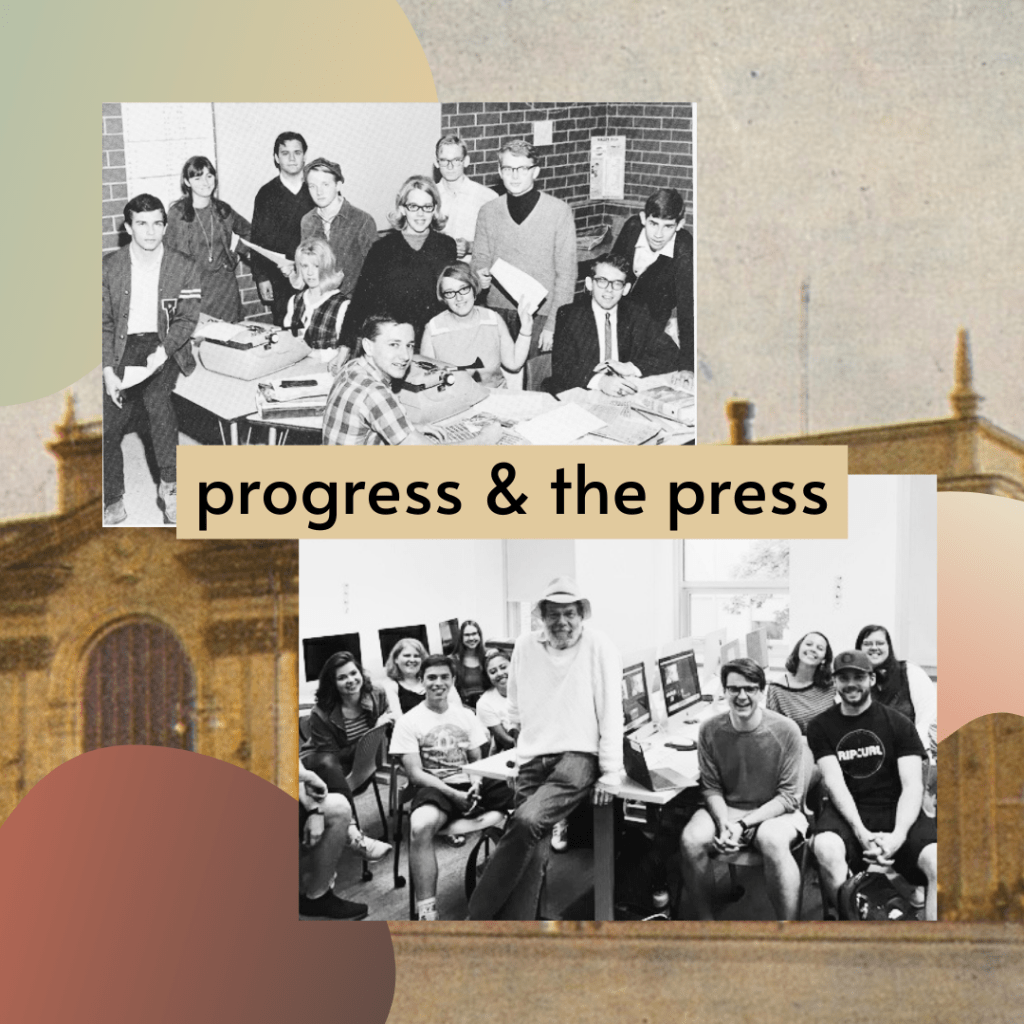
These themes aren’t unique to Janice’s life. Journalism permeates the stories of many of the pen pal project’s main characters: Ray McFetridge’s son Scott is a news editor for the Associated Press in Nebraska-Iowa; Charles O. Porter worked as a reporter for The New York Times. What this story makes clear is that, whether or not someone has a direct connection to the professional journalist’s world, every American life has been impacted, on some level, by some form of journalism. Reporting is the gatekeeper of fact and the foil to governmental censorship. It was, after all, the Roseburg News-Review that initially brought Classroom 15 into the spotlight—so effectively, in fact, that letters came from the Soviet Union to the Riverside School (even if those letters were never seen by the schoolchildren there). And it was, after all, The New York Times that first exposed our cohort of University of Oregon journalism students to rediscover the Classroom 15 story and delve into its complexities.
Read the rest in Classroom 15: How the Hoover FBI Censored the Dreams of Innocent Oregon Fourth-Graders.
 JULIA MUELLER